Guest post: What to Consider When Choosing a Costume for a Long Parade

(The following article is a guest post! We thought it would be useful to anyone who wants to wear a costume in a parade, especially since some of the larger conventions have costume parades that people can participate in!)

They say everybody loves a parade, but you can quickly become the exception that proves the rule if you choose to march in a costume that is uncomfortable or inappropriate for the weather. Fortunately, there are steps you can take to make marching in even the longest parades a pleasant, memorable experience. While your local search might provide you with limited options, with enough planning you can build your own costume or special order pieces to open up a whole new world of possibilities. Before selecting your costume, decide to be a savvy participants and make sure you considered these top four questions for choosing the best costumes for long parades:

Does the Costume Accommodate Comfortable Footwear?

Whether you are marching or walking, taking part in a long parade can be demanding on your feet and ankles. Hard, asphalt surfaces and uneven pavement can quickly start you down the path to a night full of aches and pains. Keep this problem at bay by selecting a costume that accommodates comfortable footwear. Avoid high heels at all costs, and if you can, line your shoes with soft, comfortable gel inserts.

Is It Appropriate for the Weather?

In most locations, a skimpy costume made from wispy fabrics will be a poor choice for a parade scheduled for a brisk December afternoon. Similarly, in the summer, a full-body sports team mascot outfit with a fully enclosed mask could lead to heat exhaustion or worse. Fortunately, during hot weather you can often keep yourself cool—even in the bulkiest outfits—by choosing a costume that includes an internal fan. You can do plenty of research online, include searching sites like buycostumes.com Halloween costumes for inspiration and planning. Beyond your costume, make sure that you wear appropriate clothing underneath.

Is It Made of Breathable Fabrics?

Even in cold weather, you can quickly work up a sweat as you proceed down a parade route. In the summer months, getting hot in a costume is a given. Wearing breathable fabrics will help keep your temperature regulated as well as keep you comfortable and free from chafing. Both your costume and the clothing you wear underneath it should breathe easily. While a detailed latex mask or accessories might be tempting, remember that they will hold in moisture which could make you miserable.

Does It Pass the Run Test?

Complicated, spectacularly adorned costumes can be a real temptation when you want to make an impact on parade viewers. Unfortunately, if they are not put together carefully, they can easily make walking uncomfortably or cause you to look like a disaster. Imagine trailing your accessories along or having a critical piece of your outfit fall off en route. To avoid this, try using the “Run Test.” Put on your costume and move or run vigorously for a minute or two. Anything that comes loose or falls off needs to be removed from your costume and reattached securely. A successful run test can keep you comfortable and looking as good at the end of the route as you did at the start of the parade.

Marching in costume in a parade should be a fun, memorable experience. Choosing the wrong outfit can make that an unlikely outcome. When deciding what to wear, apply a healthy dose of common sense. With a little searching, you can find any number of costumes that will “wow” the crowd and without making you miserable.

WoW pet code giveaway!

We just reached 500 likes on Facebook (pretty exciting for us!) and so we’re giving away 6 WoW pet loot codes. We’re giving away 3 on our page, and 3 here. Just leave a comment below telling us why you love to cosplay, and at 9am, June 19, we will do a random number generator and choose 3 winners for a random pet code. Good luck!Image

The contest is now over! Since apparently only three people cared about trying to win a pet, all three commenters won a pet! Congrats!

Work, work, work.

Yeah, we’ve been absent from our blog. If you aren’t a fan of our Facebook page, then you probably have no clue what we have been up to, but that’s okay. I’ll update you!

We have been…

Building Parn’s armor (and sword with sheath) from Lodoss War.

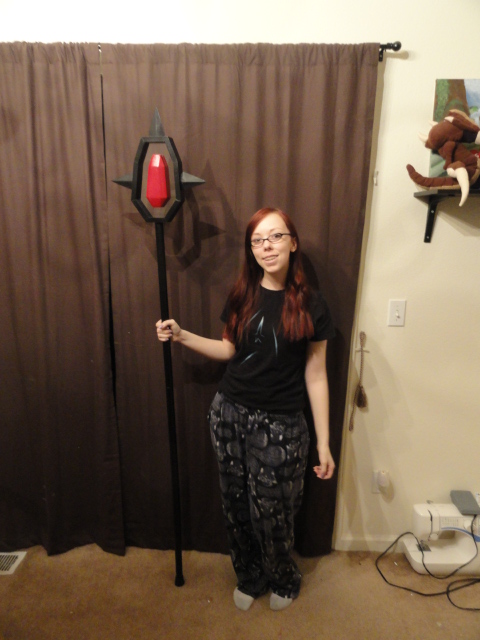
Making Benni’s staff, from Looking For Group (comic).

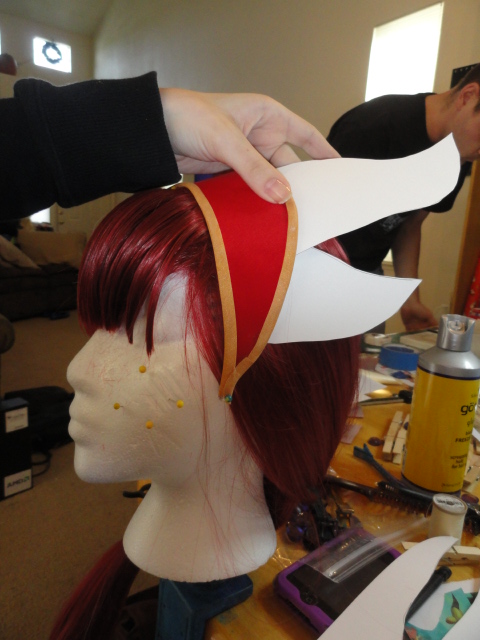
Working (slowly) on Alexstrasza’s wig.

Going to an amazing wedding, and

getting ready for our own wedding, as well as

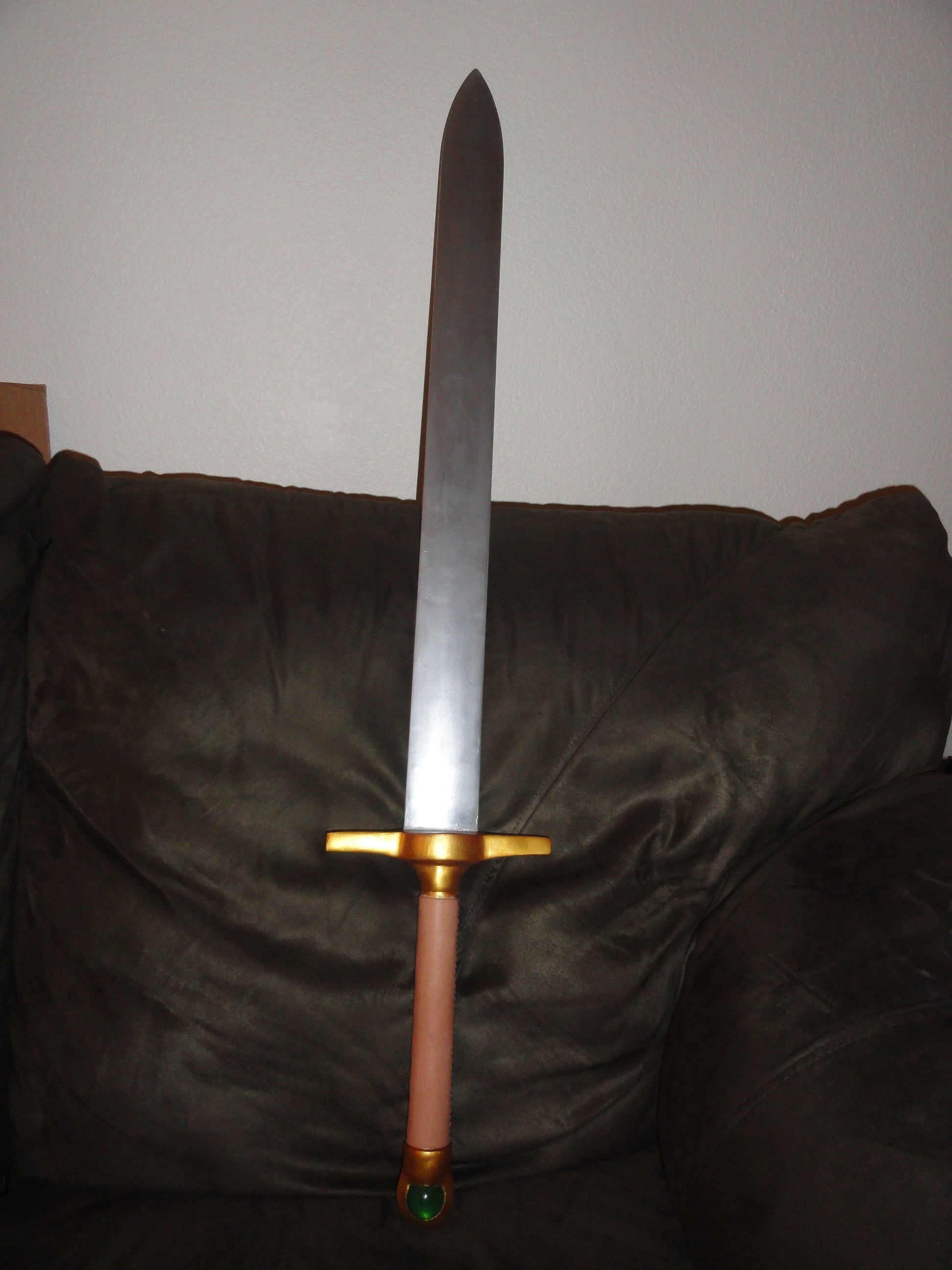
building Elspeth’s sword, from Magic the Gathering (for this lady right here).

Soon we’re off to our honeymoon, then a busy summer getting ready to move to a new state, but we promise that more tutorials are coming, as well as some previews of upcoming personal costumes for San Diego Comic Con!

Also happening today (or in a few hours, as I write this) is Diablo 3, hooray! Mario and I are quite sad that we don’t live in Southern California, or we would be all painted as Witch Doctors and enjoying the festivities. My Witch Doctor is still my favorite costume that we’ve made so far!

Don’t forget to follow our page on Facebook if you want to be kept more in the loop on what we’re doing, since I do tend to like to put up more lengthy posts than “here are some progress photos!” on the blog.

Starcraft Medic Shield Commision

Back in the start of 2011 a friend asked up to help her out with a fan art inspired Terran medic.

I took on the project even though we were knee deep in the Kerrigan build at the time. I have love of prop weapons and accessories making it very hard to turn down the opportunity to make a something as cool as a 4foot shield!! Continue reading

Queen of Blades tutorial Step Ten: shoes, attaching dreads

In this post I’m going to discuss the little things that didn’t really have enough content for a post in itself. One of these items are the heels of the shoes. The first thing I did for the feet after we cast the shoe covers in foam latex, is trim the excess foam off, and have Mario make the seams disappear- we’ll cover seaming shortly. Then, I glued the covers to the shoe using the same rubber cement we used to make the paint. After that, I grabbed some two part epoxy clay (we used Magic Sculpt) and sculpted out the heels.

Now, the Magic Sculpt didn’t take the rubber cement paint very well, so we had to paint them with acrylic paint. Continue reading

Queen of Blades tutorial Step Nine: Painting your pieces (for foam latex!)

For foam latex, there are many ways you can paint it, and each way has significantly different materials and its important to look at the positive and negatives of each method. I’ll list the ways you can paint it first, then detail the way we painted our suit. We decided to airbrush our body suit, due to the fact that paint brushes are poorly suited to the task, and using sponges would take way too long.

Materials to paint foam latex with:

RMG paint Continue reading

Queen of Blades tutorial Step Nine: Casting your pieces

Finally, after you’ve molded your parts, sculpted your pieces, and cast your molds, you can cast them in your material! We used foam latex, so that’s what this tutorial is for.

To bake foam latex, you need an oven that you do not cook food in, that will go as low as 160 degrees Fahrenheit. It must also be able to fit your molds into the oven, which is why we built a huge one, to fit our body mold in there. You also definitely need a scale that measures in grams.  Continue reading

Queen of Blades Tutorial Step Eight and a Half: finishing the wings

So last week, Mario told you all how he put together the skeleton structure of the wings. We were going to add how we finished the wings but we felt like the post was getting a bit long, so here you go!

Once we had the skeleton of the wings taken care of, we took the wing stand that Mario built using some scrap wood and the base that the body sculpture was on outside so that we could have more space to work on the foam. Continue reading

Queen of Blades tutorial Step Eight: The Wings

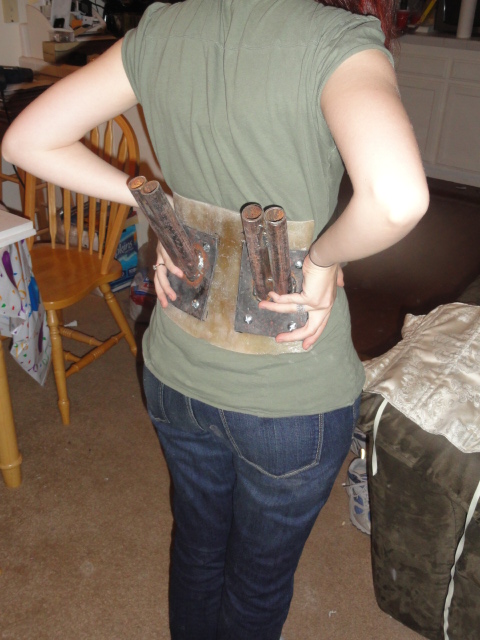
Alice has been diligently updating every week so I’m sure you can see how complex this build truly has been. It was a learning experience at every turn, and during a trip to our local Tap plastic I found they carry a machine wound fiberglass tube in several sizes. We decided to by one and see just how strong it was.

After some testing, we were willing to give an idea that I had running around in my head a try. I had spent some time in my youth backpacking an I knew that if there was any way to make the wings full sized then the weight would have to be carried on Alice’s hips.

We had already looked at a using a corset to help “enhance” Alice’s figure and it would also lend its self nicely to a mount for the wings. Continue reading

Queen of Blades tutorial Step Seven: Molding the smaller pieces (or: how to make stone molds!)

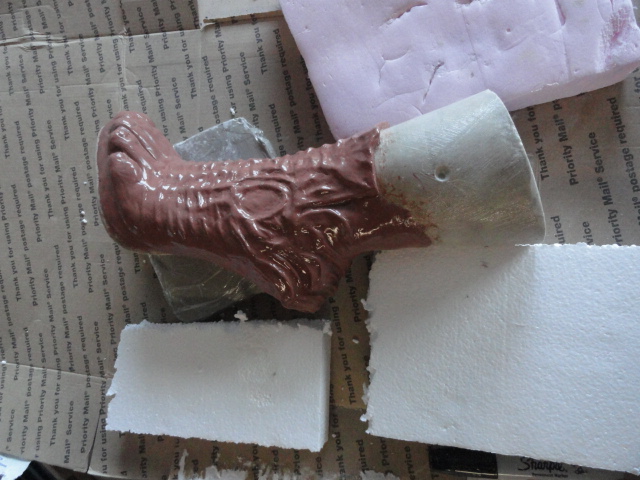
Now, one of the things that was the least stressful for me, stone molds. The basics of making a mold (no undercuts, mold line, the dreaded clay wall…) are covered in the fiberglass mold tutorial, so check that out first, I’m just sticking to what makes a good stone mold in this.

As with the fiberglass molds, make sure there is a key in the stone part of the mold, to help line up the mold with the inner piece when you’re casting. Put a layer of clay covered with saran wrap under your sculpture so that the details aren’t ruined by laying on the table, and make sure to mark out your mold line with a sharpie. Continue reading